Most individuals intend to learn CPR and first aid at some point. Then work meetings stretch late, children' tasks fill up weekend breaks, and that good intention slides down the top priority checklist. I have actually watched it take place for years while running first aid and CPR training Click to find out more classes for busy specialists, parents, and pupils.
What altered the game was the increase of fast first aid courses and express CPR training options that appreciate tight routines without watering down the life-saving skills.
The difficulty is figuring out which fast courses really deliver strong skills and a legitimate first aid certificate, and which ones simply hurry you past what issues. If you have a congested schedule and a real demand for training, you require speed and top quality, not one or the other.
This guide goes through just how compressed CPR and first aid training operates in technique, where fast styles make sense, and exactly how to pick an option that fits your life without leaving you not really prepared in an emergency.
Why short, concentrated CPR training benefits busy people
When I ask students why they postponed training, the tales are similar. Wellness workers stuck on rotating shifts. Parents managing child care. Building employees traveling between sites. They require CPR courses and first aid training to stay used or satisfy regulatory needs, however the concept of losing a complete day or weekend in a class is a bargain breaker.
Fast first aid training and express CPR courses became a straight feedback to that fact. As opposed to anticipating students to stop their lives, companies revamped courses around three ideas: trim the fluff, usage pre-course on-line discovering where possible, and hone the concentrate on the skills that matter under pressure.
The key point is this: brief does not have to mean superficial, if the course is structured well. As a matter of fact, I have seen some students preserve more from a three-hour fast cpr correspondence course than from an all-day workshop, because the web content was targeted and they were fully engaged.
Speed comes to be a trouble just when it reduces into practice time or skips core subjects. The remainder is down to smart style and great teaching.
What "fast" and "express" first aid courses in fact look like
The language about fast first aid courses can be complicated. You will see terms like "express first aid training", "fast cpr", "combined knowing", and "accelerated" thrown around in marketing. Underneath the tags, many fast choices fall under a couple of useful formats.
Blended learning: online theory, short in-person skills
This is the workhorse style for contemporary first aid and CPR training. You complete the expertise part online at your own pace, commonly basically components with videos, quizzes, and instance examples. After that you participate in a quick face-to-face session to practice and demonstrate skills.
For instance, an express first aid course may consist of 3 to 4 hours of on the internet work complied with by a 3-hour in-person class. A typical matching could run 6 to 8 hours completely in a classroom. In both, you learn CPR, fundamental first aid, and just how to reply to common emergencies, however the combined variation allows you handle the concept on your own timetable.
This is where several fast first aid courses really gain their name. You are not spending course time paying attention to content you could absorb in your home. Class hours are booked for practising compressions, using an AED, placing somebody in the recovery placement, or working through practical scenarios.
Compressed in person sessions
Some organisations desire whatever carried out in individual, yet still require a short time window. In that instance, carriers often create fast cpr courses or express first aid courses that run, for instance, 3 hours rather than a full day.
These job well as:
- Workplace team sessions run on-site prior to or after shifts Short courses for university cohorts or trade students Regularly arranged public classes for people hunting "fast first aid course near me"
Because all discovering takes place live, instructors must relocate briskly. The far better ones strike a balance in between covering needed subjects and investing adequate time on the hands-on parts.
Topic-specific or role-specific express courses
Not every learner needs the exact same deepness. This has actually given rise to targeted alternatives such as:
Express childcare first aid courses focus on babies and kids, choking in younger age groups, febrile convulsions, allergic reactions, and typical household injuries. These are perfect for parents, childcare workers, and educators.
Fast cpr correspondence course alternatives are aimed at people that already hold a first aid certificate or CPR training and simply require to upgrade abilities and renew their fast certification. Since they feature a structure, the refresher can focus greatly on practice and updates to guidelines.
FAP first aid or similar course codes (relying on the nation) suggest specific workplace or sector requirements. A compressed variation might be readily available if regulatory authorities and training carriers agree on a combined or accelerated format.
The essence is basic. If you do not need every progressed subject, you can typically select a concentrated course that matches your duty and cuts down the total time.
Where speed must stop: minimum requirements that must never ever be rushed
When individuals ask me whether a particular fast first aid course is "sufficient", I do not start with the period. I begin with what can not be sacrificed.
There are a few non-negotiables in any type of trustworthy first aid and CPR course, whether it is labelled express cpr, fast first aid, or conventional training.
First, there have to be genuine, time-on-task technique. Watching a video clip of upper body compressions does not prepare you for the feel of doing them on a manikin. When a course packs dozens of learners right into a space and gives each one a minute or more on the tools, that is not premium CPR training, no matter for how long or brief the day is.
Second, you need to have a clear path to an acknowledged first aid certificate or CPR certificate at the end. Fast certification still needs to please your company, regulatory body, or expert association. That usually suggests the carrier is certified by an identified authority in your area, and the credentials stands for a specified period, typically one or three years for first aid and commonly one year for CPR.
Third, assessment needs to be more than ticking a box. Great first aid and cpr course suppliers test both expertise and abilities. The understanding component can be an online quiz in a combined first aid and cpr course, however the abilities should be assessed in person by someone that understands what correct technique looks like.
If any one of those pieces look weak, be cautious. A fast first aid course is helpful only if it leaves you all set to act when a colleague falls down or a youngster starts choking at home.
Choosing the best sort of fast first aid or CPR course
The best express first aid training for you relies on your objectives, your schedule, and your previous experience.
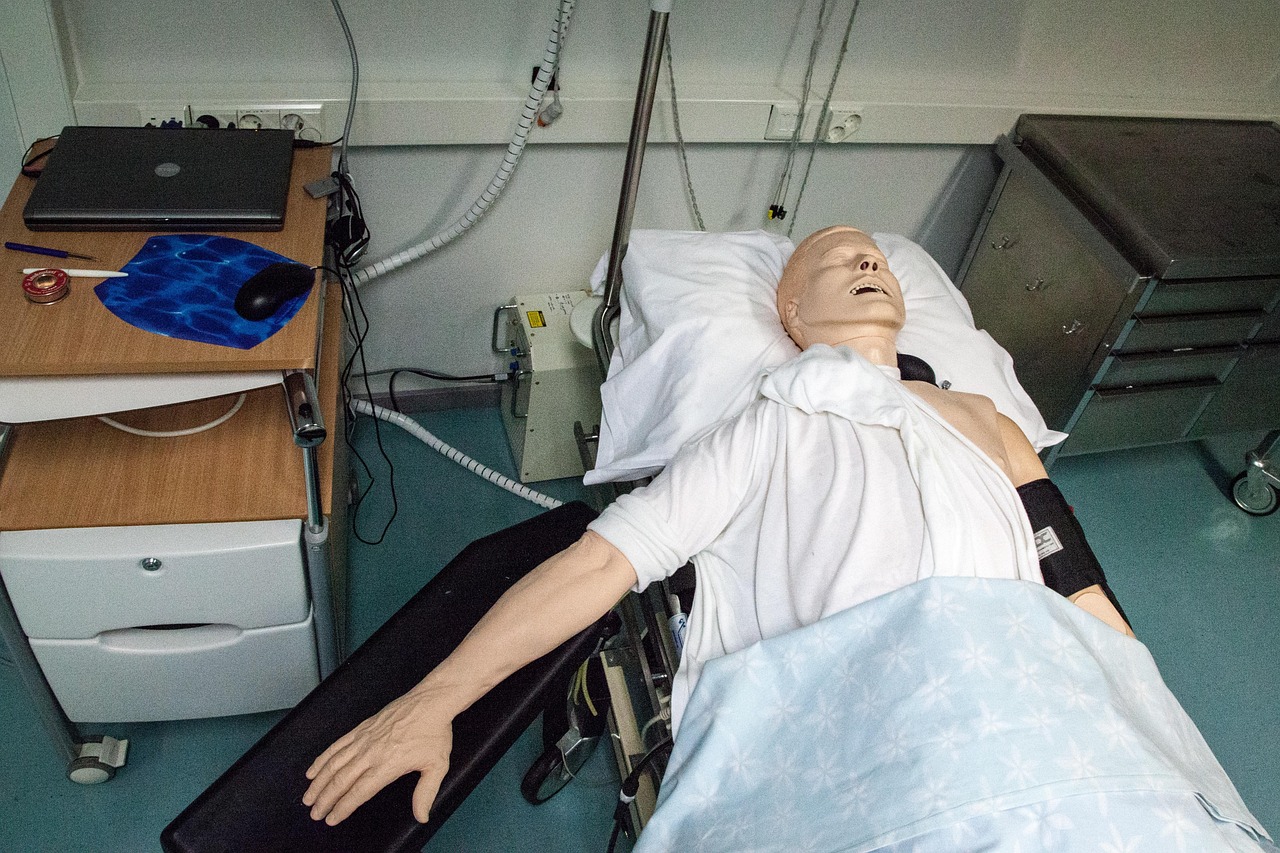
If you have never had first aid training, you will certainly want a course that covers both first aid and cpr in an organized means. Look for first aid and cpr training classes that bundle both, instead of attempting to piece together separate cpr courses and fundamental first aid options. It is a lot more efficient and gives you a systematic structure for managing an emergency scene.
If you work in healthcare, building and construction, friendliness, childcare, or any kind of controlled market, start by inspecting your specific demand. Some functions demand a details first aid course code, advanced modules, or a certain minimal variety of call hours. Once you understand that, you can look within that category for combined or fast first aid training options.
If you are a moms and dad, carer, or just a determined layperson, you have more adaptability. An express cpr course or express first aid course that runs in the night or over a single brief early morning often fits finest. In https://rowanhdye112.theburnward.com/exactly-how-a-fast-first-aid-course-can-save-lives-in-your-neighborhood my experience, motivated moms and dads in express childcare first aid training sessions ask several of the most useful concerns, due to the fact that they imagine their own kitchen area, backyard, or auto every single time we speak about a scenario.
And if you currently hold a credentials, do not take too lightly the value of a fast cpr correspondence course. Standards change nursing scientific research advances, AED motivates change, and bad routines slip in over time. A 90 min or 2 hour express cpr training block, focused entirely on upper body compressions, rescue breaths (where required), and AED usage, can recover self-confidence even more successfully than trying to review alone from a handbook.
How online, mixed, and in-person formats compare
Many learners ask whether online-only CPR training or first aid courses "matter." From an abilities perspective, the brief response is no. Viewing video clips does https://donovanxvtl617.trexgame.net/first-aid-certificate-in-hours-not-days-is-fast-training-effective-1 not replace hands-on method, specifically for something like upper body compressions where depth, rhythm, and body mechanics matter.
What online modules can do incredibly well is deliver theory and context. As an example, in mixed first aid and cpr courses, I commonly designate pre-course material on:
- Legal and ethical factors to consider Basic composition and physiology Recognising cardiovascular disease vs heart attack Stroke indicators and the FAST list Scene security and infection control
When pupils arrive for the express cpr or express first aid session, they already talk the same language. That lets us invest class time on the physical abilities: compressions, breaths, utilizing an AED, hemorrhaging control, bandaging, and handling a subconscious but breathing casualty.
Fully in-person fast first aid courses can still function well, especially for teams that learn far better in person. The risk there is that trainers may really feel pressure to "talk" the theory promptly and shortchange technique. If you participate in such a session, take note of just how much of the clock is invested with you actually doing things vs listening.

Purely online "fast first aid course" offers without any in-person element usually do not please work environment or governing requirements, and a lot more notably, they do not evaluate your capacity to perform under stress. They may be useful as a preliminary intro, however not as your major training.
The wonderful spot for many people is a combined, express first aid course that appreciates your time while still demanding real efficiency in the classroom.
What you actually find out in a pressed first aid and CPR course
People typically stress that an express cpr course or short first aid training session will certainly miss essential topics. The reality depends upon the service provider, however a well made fast course must still cover the core emergency situations that non-medical responders are most likely to face.
In a regular mixed first aid and cpr course delivered over, claim, 3 hours of on the internet work plus 3 hours of class abilities, you can sensibly anticipate to walk away with:
A step-by-step method to handling an emergency situation scene, including checking for risks, calling for assistance effectively, and prioritising several casualties. Practical CPR training, tailored to grownups and, where relevant, kids and babies. That consists of appropriate hand placement, compression deepness and rate, how to minimise disturbances, and just how to securely exchange with another rescuer. Confident use an automatic external defibrillator, consisting of just how to apply pads, comply with voice prompts, and keep everyone clear throughout evaluation and shock delivery. Essential first aid skills such as controlling bleeding, making use of stress and dressings, managing burns, placing somebody in the recuperation setting, and acknowledging shock. Recognition skills for usual time-critical problems like stroke, severe allergies (anaphylaxis), heart attack vs heart attack, asthma flare-ups, and diabetic emergencies, in addition to what you can and can not do as a first aider.More specialised express childcare first aid courses add or emphasise baby and youngster CPR ratios, choking in young children and children, fever-related convulsions, risk-free handling, and child-specific injury patterns.
Fast cpr courses that function as refresher courses usually think you currently recognize these structures. They concentrate much less on new concept and more on fixing method: pushing tough enough, using your body weight rather than your arms, keeping a constant rhythm around 100 to 120 compressions per minute, and functioning efficiently around the AED.
If a provider offers an express first aid or fast first aid course that shows up substantially much shorter than equivalent courses, ask precisely which topics are consisted of and which are not. You might find it is a concentrated component, such as CPR-only, instead of a full first aid course.
Getting one of the most from a fast CPR or first aid session
Speed multiplies the impact of prep work. The more all set you are when you walk into a fast first aid course, the more of that short in person time you can devote to practice and feedback.
Here are basic means to make a pressed session really feel richer, not rushed:
Complete any type of pre-course online training correctly. Do not miss videos or thrill tests. Treat it like an actual class, since it is the structure for your hands-on job. Arrive relaxed and promptly. In a conventional all-day course, shedding 15 minutes at the beginning is frustrating but convenient. In a 2 or 3 hour fast cpr or express first aid training block, that wasted time is considerable. Ask particular, real-life inquiries. Rather than "What concerning bleeding?", try "If I am alone with my youngster and they reduced their hand terribly in the cooking area, at what factor do I call a rescue vs drive them to immediate care myself?" Specifics assist teachers tailor explanations to your world. Volunteer for demos and added practice. Short courses frequently relocate promptly in between stations. If you can, remain a min much longer at a manikin, or ask the trainer to enjoy you carry out a full cycle of CPR from beginning to end. Review right after the course. The fastest method to lose skills is to deal with the certificate as the goal. Reread your handbook, take another look at the online components, or walk on your own with a psychological wedding rehearsal at home: you find somebody broke down, what do you do first, 2nd, third?Even if your fast first aid training felt dense, this sort of follow-up cements the discovering and aids bridge the space till your following fast cpr refresher course.
How to evaluate a training service provider in under ten minutes
When individuals look for "fast first aid course near me", they generally see a lengthy list of companies with comparable guarantees. Arranging them can feel like uncertainty, but a little framework helps.
First, inspect whether the supplier names the accrediting or accepting body on their internet site. If you remain in a nation where first aid and cpr courses are nationally controlled, verify the course code or program is present. If they avoid information or rely upon unclear language like "commonly identified" without specifics, deal with that as a caution sign.
Second, try to find quality concerning delivery style. A reliable summary will certainly inform you how many hours are online, the number of personally, and what the in-person session covers. Fast first aid courses that simply state "quick and very easy" without timetables or failures often convert to hurried or insufficient experiences.
Third, check out any instructor biographies if readily available. Real-world experience issues. Trainers that have worked in paramedicine, nursing, emergency services, or high-risk markets often tend to bring dazzling examples and useful shortcuts that stick with learners. That claimed, a few of the best trainers I recognize are occupation instructors who are experts in making complex topics accessible; the trick is that they are not simply reading slides.
Fourth, eye images or summaries of the training setting. For real hands-on CPR training, you desire enough manikins for small groups, tidy and useful AED instructors, and an area where individuals can stoop, roll casualties, and walk around. A cramped space with thirty chairs firmly packed typically implies restricted practice.
Finally, skim evaluations with a vital eye. Comments like "fun" and "loosened up" are nice, however you are seeking phrases such as "lots of technique", "clear descriptions", "felt great after that", or "helpful for my task as a child care worker/ nurse/ site manager." These indicate that the course did greater than entertain.
When a conventional course could be better than a fast format
Despite the benefit of fast cpr and express first aid choices, they are not perfect for everyone.
If you are very distressed regarding emergency situations, have language barriers, or discover slower than average in team setups, a longer course may really feel much less pressured. Added hours give you a lot more opportunities to ask concerns, repeat skills, and absorb information. I have had learners begin in an express first aid course, know they desire more time, and button to a full-day variation for precisely this reason.
If you are moving right into a function with heavy obligation, such as a designated initial aider on a remote worksite or an elderly child care placement, the added scenarios and prolonged sensible time of a basic first aid course can be invaluable. You can not practice every possible circumstance, yet even more call hours usually suggest much more different practice.
If your organisation has not yet embraced combined layouts, or your sector regulatory authority defines a certain minimal variety of in person hours, you may be required to go to the traditional variation a minimum of once, then utilize fast cpr correspondence course alternatives subsequently.
Think of fast first aid and cpr training as one tool amongst numerous. The right option is the one that matches your threat, your duty, and your knowing design, not just the shortest one on the market.
Final ideas: speed with substance
Time pressure is genuine. Individuals work shifts, take care of family members, traveling, and juggle several functions. Expecting everybody to clear a complete day for first aid courses is no longer reasonable in several workplaces.
Fortunately, fast first aid courses, express cpr training, and blended first aid and cpr courses have developed past easy faster ways. When made well, they strip away filler, concentrate on crucial skills, and meet regulatory requirements, all while valuing your schedule.
Your job as a student is not to come to be a clinical specialist. It is to build adequate skill and self-confidence to act emphatically in the few minutes that matter most. With the appropriate fast first aid or CPR course, that objective rests easily inside an early morning, an evening, or a fifty percent day.
The certificate is necessary, certainly. However the genuine value appears later, on a street edge, at a play ground, in a workplace hallway, or close to a sporting activities field, when somebody instantly requires help and you are no longer the individual who simply stands there and wishes somebody else recognizes what to do.